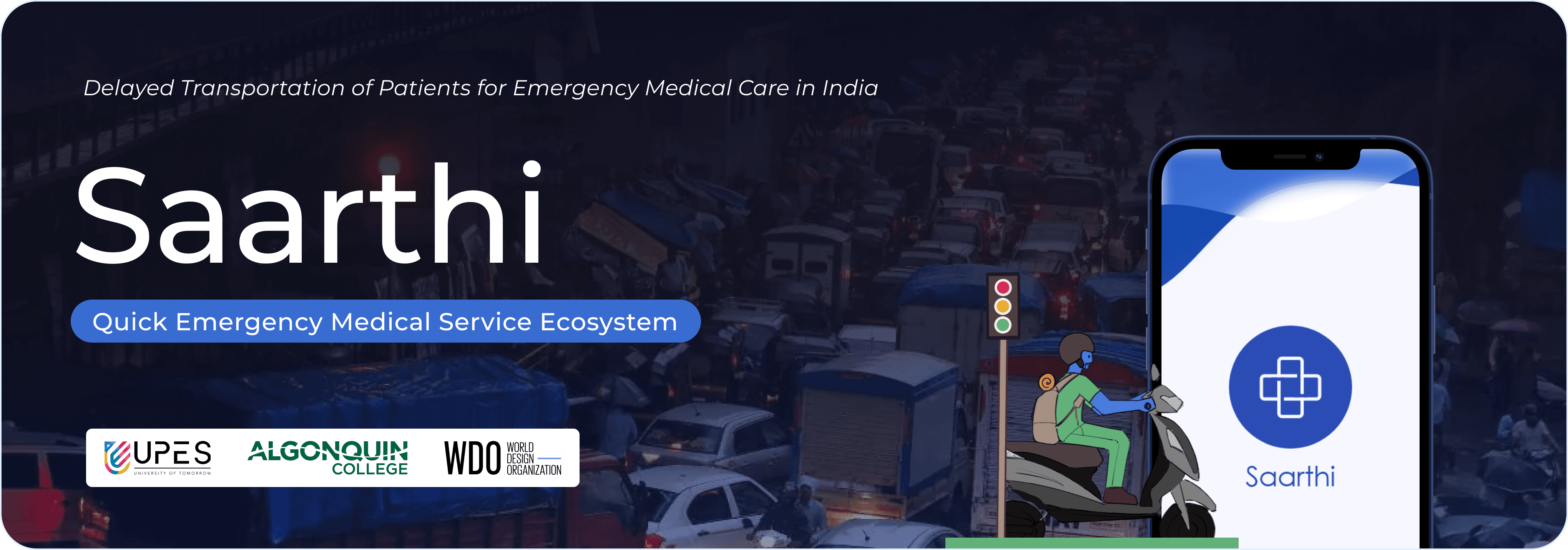
This Project has been awarded 3rd Place at World Design Challenge 2023. Team: Adwaith Sajith, Akshita Raman, Cagil Ocal, Kate Tomilov, Mayank Morkhade, Shamika Ail, Tracy Lau.
Reducing deaths from delayed emergency care
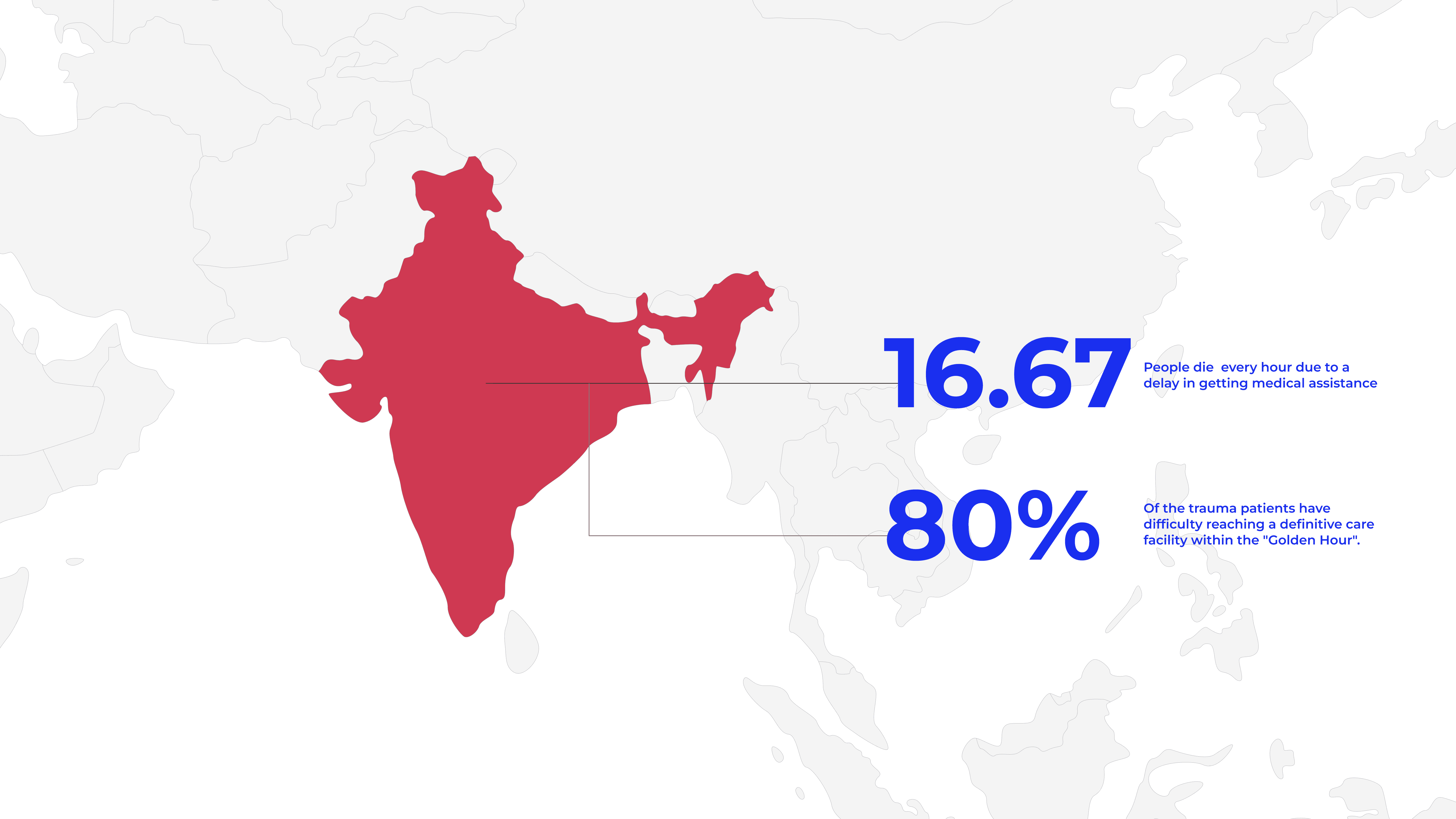
In India, 16.67 people die every hour due to delays in getting medical assistance, and 80% of trauma patients can't reach care within the "Golden Hour." I worked with a team of 6 designers to create Saarthi—a comprehensive emergency response system connecting victims, first responders, and hospitals to dramatically reduce response times.
3rd Place Winner at World Design Challenge. A solution that bridges the gap between citizens & emergency services, potentially preventing 50% of deaths that could be averted with better pre-hospital care.
Design Team Member (Team of 7)
4 weeks - World Design Challenge Competition
Stakeholder Research & Affinity Mapping
Problem Analysis (Iceberg Model)
Emergency Response App (iOS/Android)
First Responder Vehicle Design
System Strategy & Implementation Plan
Delayed Transportation of Patients for Emergency Medical Care in India
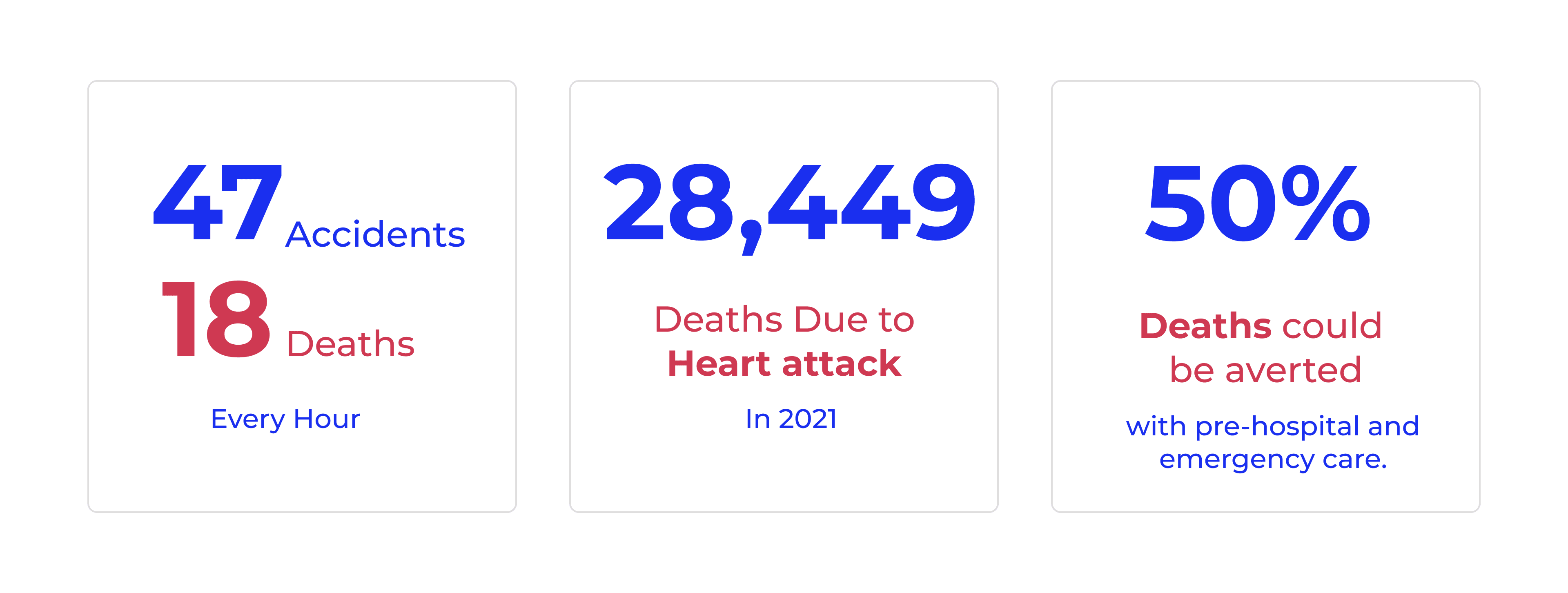
Every hour in India, 47 accidents occur and 18 people die—many of whom could have been saved.
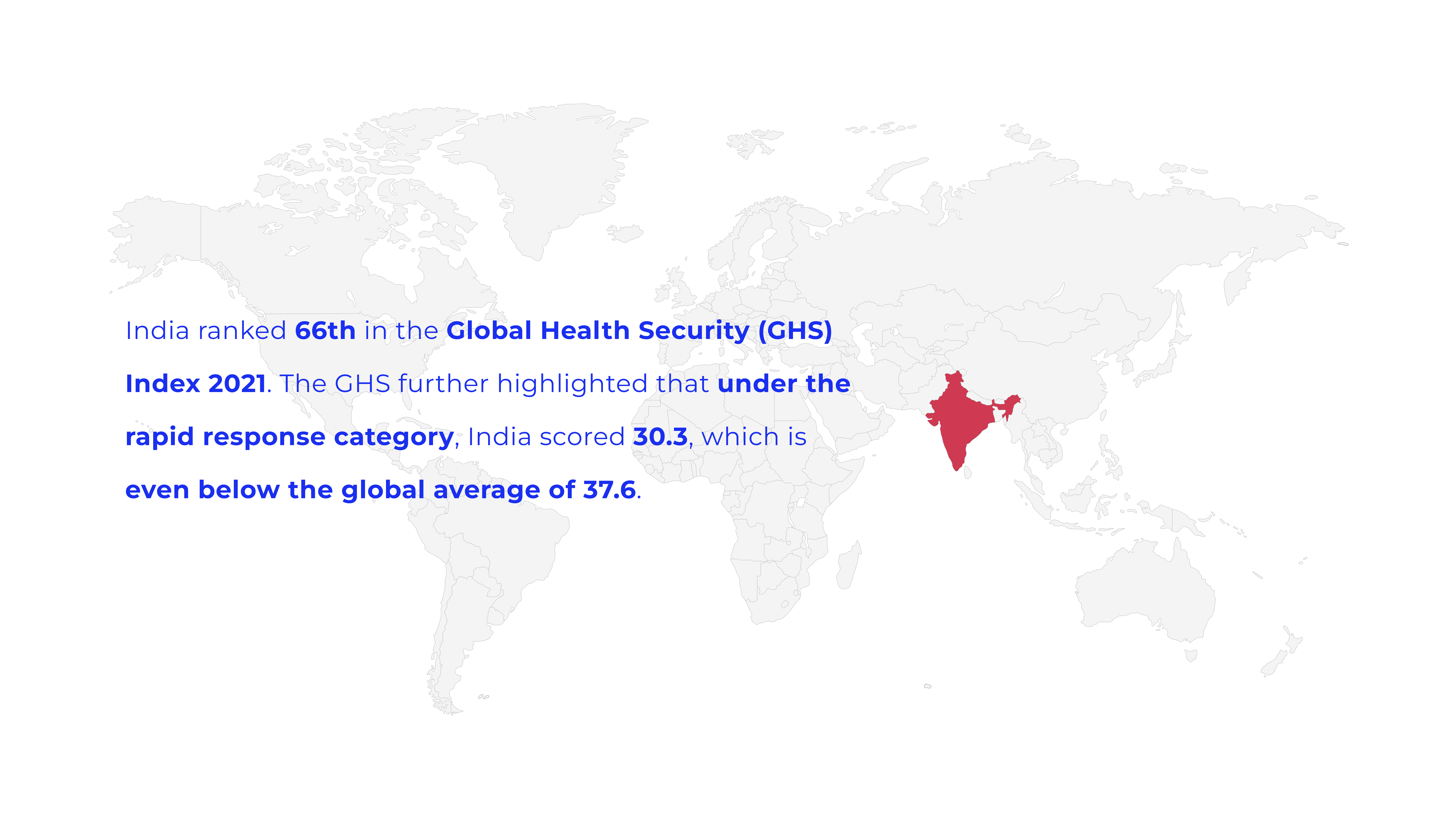
Why Emergency Response Fails in India
Infrastructure
Issues
Lack of readily available and affordable transport
Poor infrastructure and traffic congestion
No centralized governing body for emergency services
Knowledge
Gaps
Emergency Department doctors having no formal training in EMS
Poor pre-hospital care and first aid knowledge
Bystanders don't know how to help during emergencies
Communication Breakdown
No effective coordination between stakeholders
Delays in getting information to hospitals
Ambulances struggle to navigate optimal routes
How might we improve the response time of emergency medical transportation services in urban India?
Our challenge: Create a solution that addresses the entire emergency response chain—from the moment an accident occurs to when the patient reaches definitive care.
We conducted comprehensive research to understand why India's emergency response system fails and what already exists in the market.
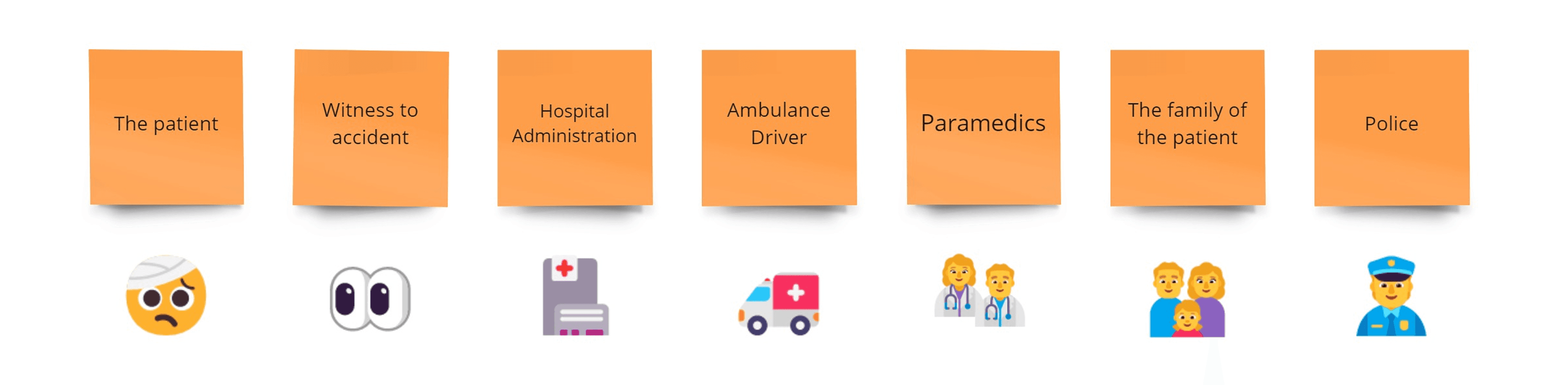
STAKEHOLDER MAPPING
Identified all key players in the emergency response chain
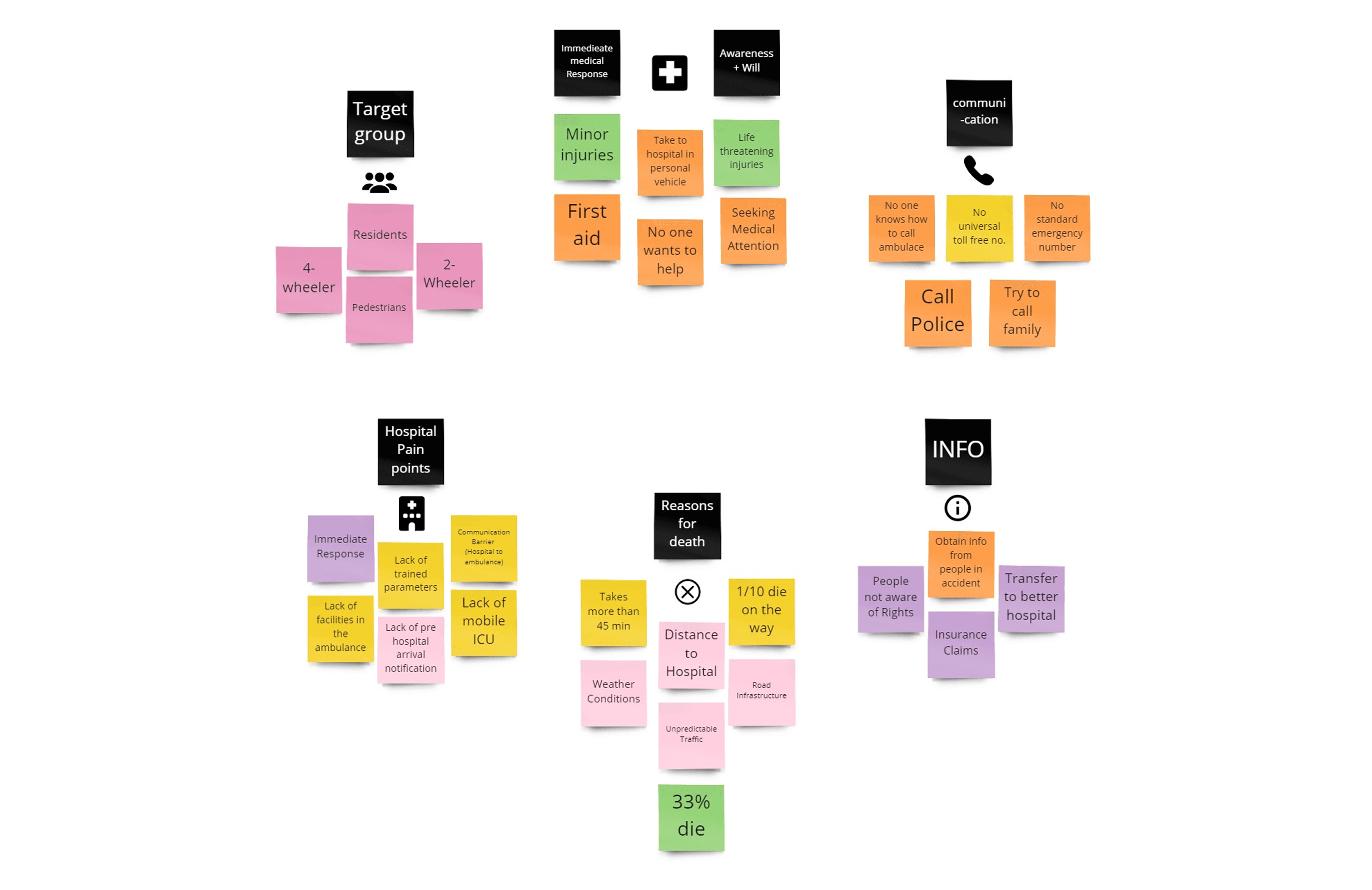
AFFINITY MAPPING
Organized insights from secondary research, case studies, and existing solutions to identify patterns and pain points.
ICEBERG MODEL ANALYSIS
Used systems thinking to uncover root causes beneath surface-level symptoms:
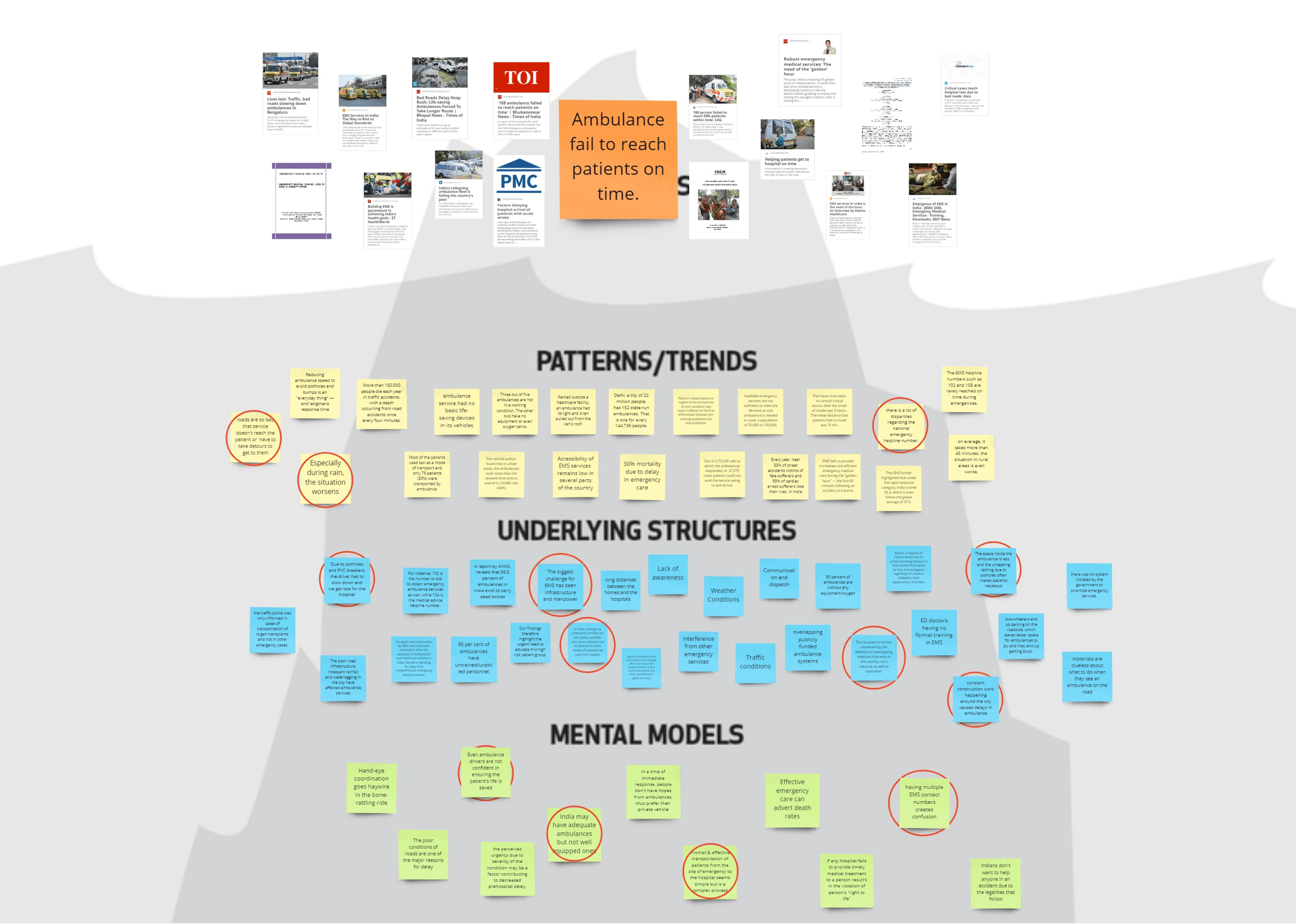
What we see (symptoms)
Long ambulance response times
Traffic delays
People dying before reaching hospitals
What's actually happening (root causes)
Lack of centralized emergency system
No formal EMS training for medical professionals
Poor coordination between stakeholders
Inadequate pre-hospital care infrastructure
We studied current emergency services in India:
01
Government Ambulance Services (108/102)
Often delayed due to limited fleet size
Struggle with traffic navigation
Limited pre-hospital care capacity
02
Private Ambulance
Services
Expensive and not accessible to all
Inconsistent response times
No standardized training
03
Emerging App-Based Solutions
Focus only on ambulance booking
Don't address the critical minutes before ambulance arrival
Limited integration with hospitals
Key Insight:
The biggest gap is the time between when an accident occurs and when professional help arrives. Those critical first minutes often determine survival, but there's no system to provide immediate assistance.
We realized the problem wasn't just about faster ambulances—it was about immediate first response combined with better system coordination.
The "Golden Hour" Challenge:
For trauma patients, the first 60 minutes after injury are critical. But in urban India, ambulances can take 30-60 minutes to arrive due to traffic and distance. By the time help arrives, it's often too late.
Our Insight:
What if we could get someone to the victim within 5-10 minutes—not a full ambulance, but a trained first responder with life-saving supplies who can stabilize the patient until the ambulance arrives?
This led us to reimagine emergency response as a two-tier system:
Immediate response (first aid providers on two-wheelers)
Full medical transport (ambulances for hospital transfer)
Our solution needed to work within India's existing infrastructure while introducing innovations that could be rapidly deployed.
Speed Above All
Every second matters. The system must minimize response time at every step.
Accessibility for Everyone
Must work for all socioeconomic groups, in any language, even without internet.
Easy to Use Under Stress
When someone's life is at risk, the interface must be instantly intuitive—no learning curve.
Coordinated Response
All stakeholders (victim, bystander, first responder, ambulance, hospital) must have real-time information.
We designed three interconnected components:

Mobile App Platform
Citizen-facing app for requesting emergency help
EMS provider app for receiving and responding to emergencies
Real-time GPS tracking and navigation
Offline emergency calling capability

First Responder Network
Trained individuals equipped with medical supplies
Using two-wheelers to navigate traffic quickly
Can reach victims 5-10x faster than ambulances
Provide critical first aid until ambulance arrives

Custom Vehicle Design
Purpose-built electric two-wheeler
Medical backpack with life-saving equipment
GPS navigation display
Emergency siren and lighting
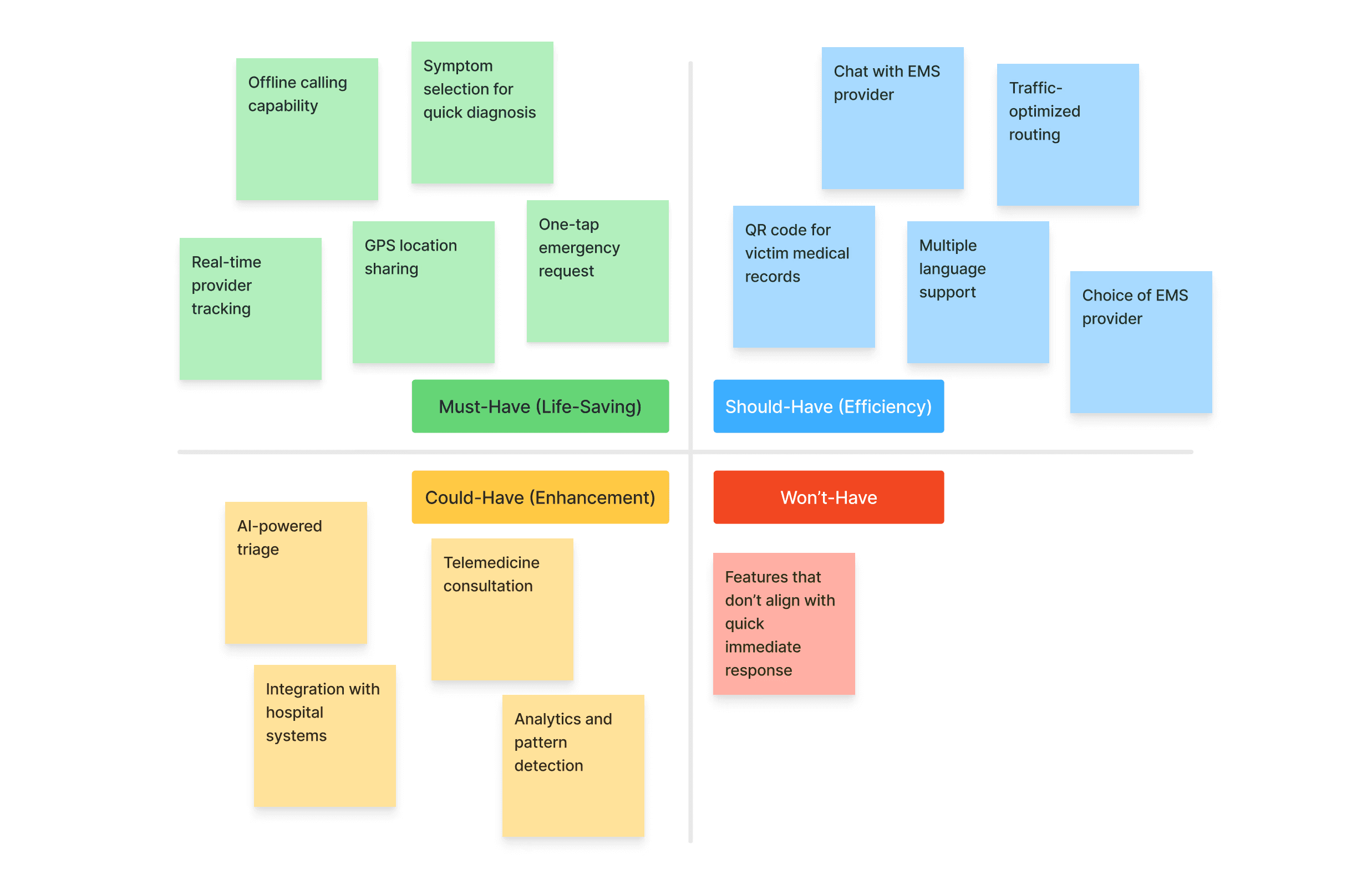
Based on our research, we prioritized features that addressed the most critical needs:
We created detailed scenarios showing how the system would work in real emergencies:
Scenario: Nilesh Witnesses a Car Accident
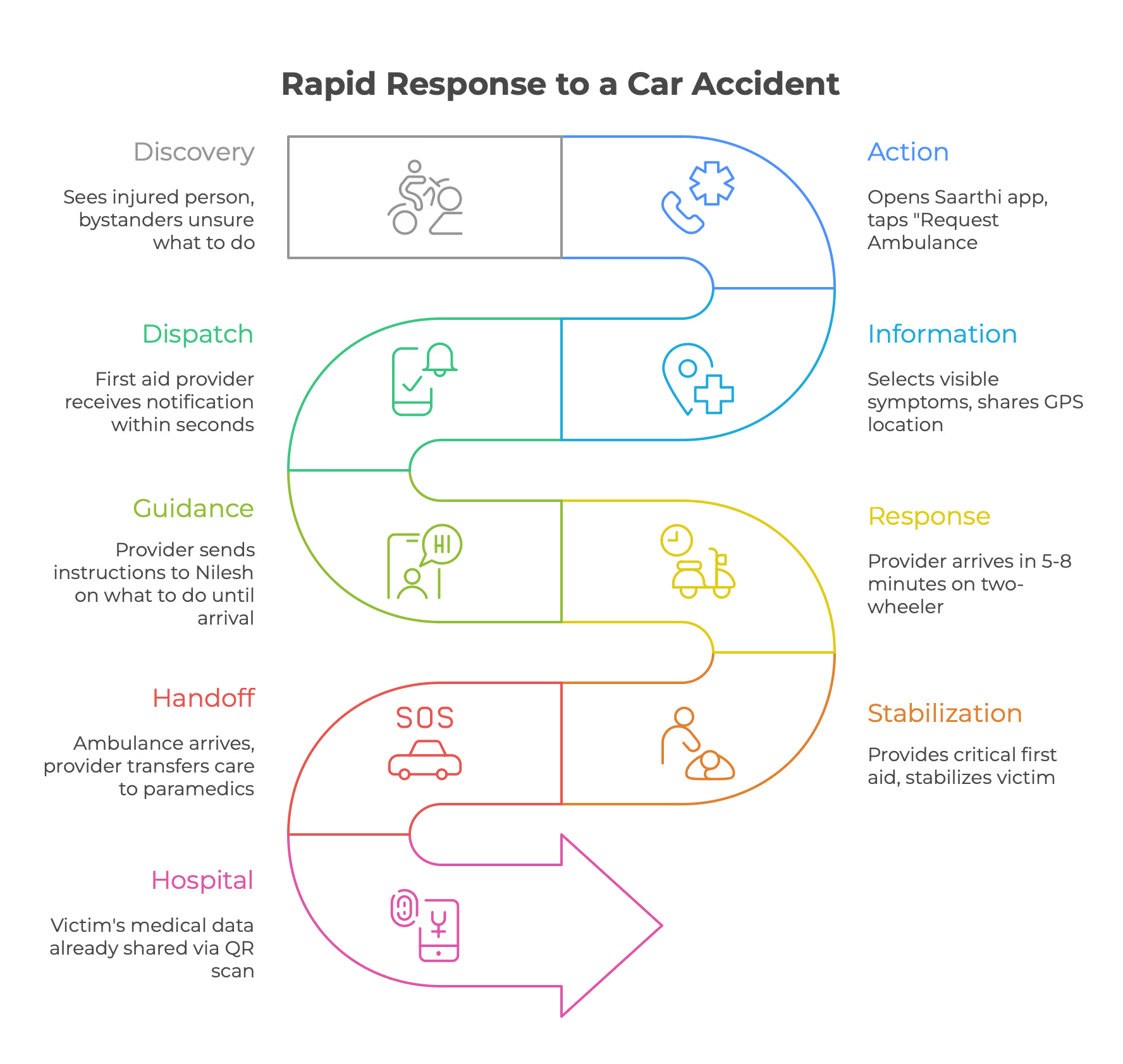
Result: What would have been a 30-45 minute wait becomes a 5-8 minute response, dramatically improving survival chances.
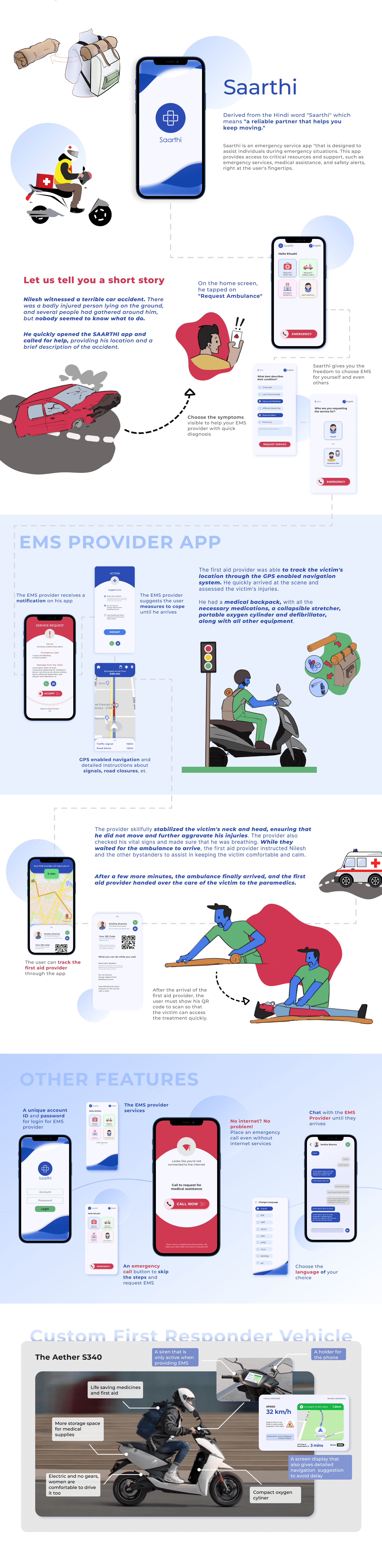
FOR CITIZENS

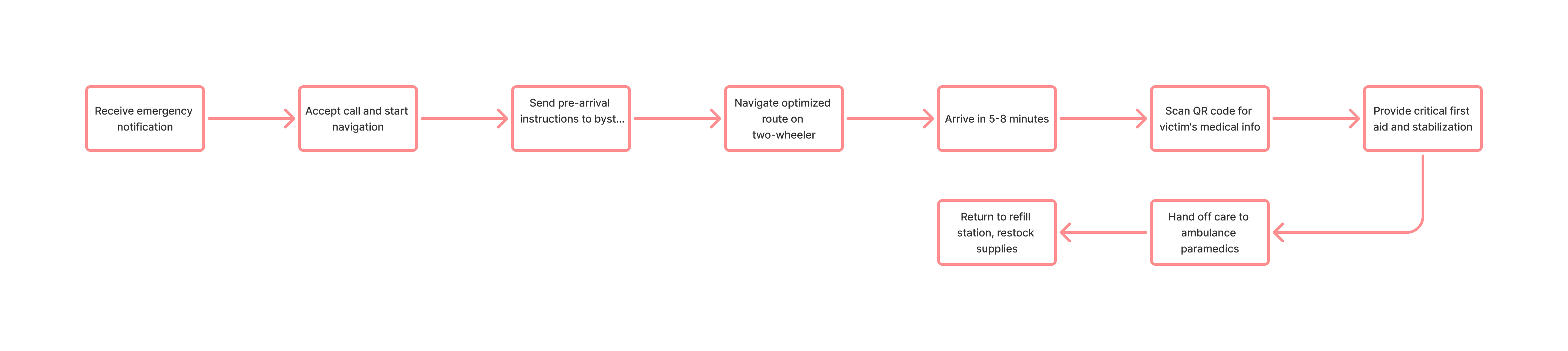
FOR FIRST RESPONDERS
Phase 1:
Pilot Program
Launch in one major urban area (e.g., Mumbai, Delhi)
Recruit and train initial cohort of first responders
Test technology and refine based on feedback
Phase 2:
Scaling
Expand to additional cities
Build partnerships with hospitals and government
Increase first responder network
Phase 3:
Technology Enhancement
AI and machine learning for pattern analysis
Telemedicine integration for real-time doctor consultation
Predictive analytics for resource allocation
Long-Term Vision:
Create centralized governing authority for EMS in India
Standardize training and operations nationwide
Integrate with traffic management systems
Establish as the national emergency response standard
Key Takeaways
Systems thinking beats isolated solutions
Initially, we focused on making ambulances faster. But through research, we realized the problem wasn't just transport—it was the entire emergency response ecosystem.
The breakthrough: Understanding that we needed to address multiple stakeholders (bystanders, first responders, ambulances, hospitals) simultaneously, not just optimize one piece.
Lesson: Complex problems require systemic solutions. Don't just solve the obvious symptom; dig deeper to understand root causes.
Constraints drive creative innovation
India's challenges (traffic, infrastructure, affordability) seemed like obstacles. But they became opportunities.
The insight: We couldn't make ambulances teleport through traffic—so we designed around it with two-wheelers. We couldn't afford expensive medical vans for every neighborhood—so we created low-cost first responder units.
Lesson: Design isn't about having unlimited resources—it's about creative problem-solving within real constraints.
Speed matters more than perfection in emergencies
Every second counts when someone's life is at risk. We had to prioritize features ruthlessly.
The decision: Rather than building a complex AI-powered triage system, we focused on one-tap emergency requests and offline calling. Rather than perfect medical equipment, we prioritized getting something life-saving to victims fast.
Lesson: In high-stakes contexts, "good enough, right now" beats "perfect, eventually." Ship the life-saving features first, iterate later.
Collaboration amplifies individual strengths
Working with 6 other designers from different backgrounds was challenging but transformative.
What I learned:
Different perspectives catch blind spots in your thinking
Dividing research, ideation, and design work accelerates progress
Healthy debate improves the final solution
Presenting a unified vision requires compromise and synthesis
Lesson: Great design is rarely a solo effort. Learn to collaborate, communicate, and build on others' ideas.