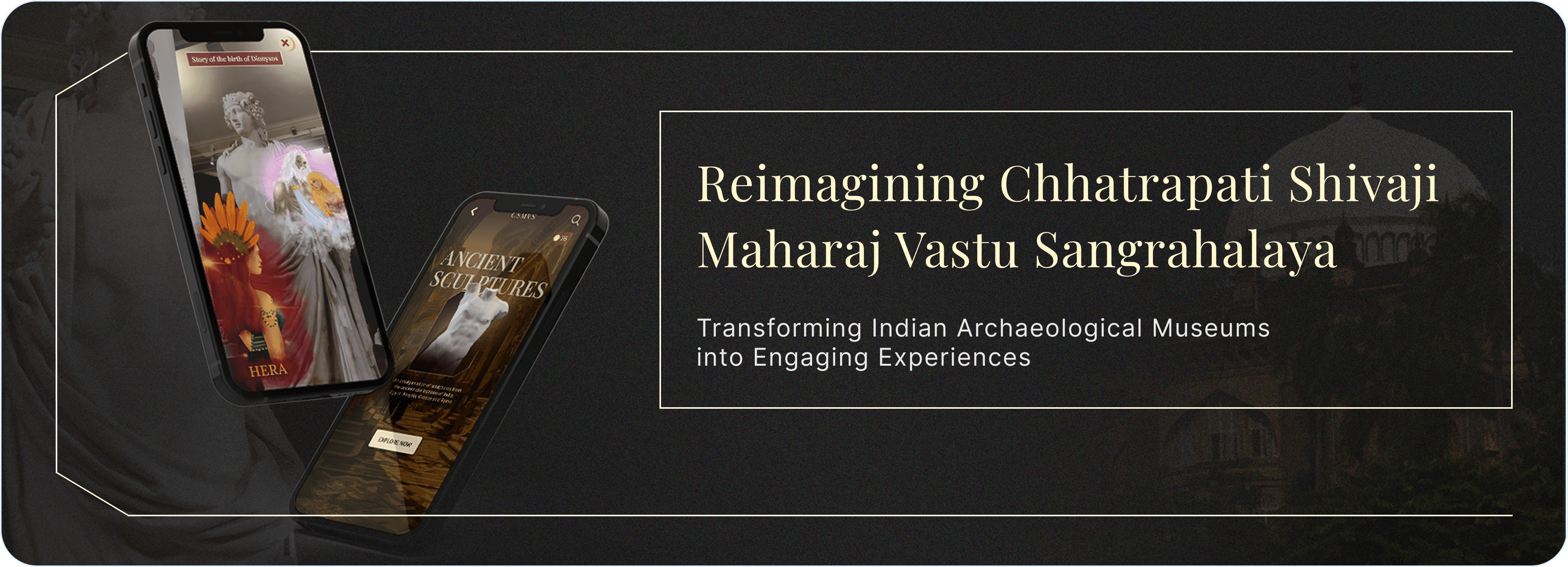
Research published at ICoRD 2025. You can read it by clicking below.
Transforming one-time visits into regular weekend destinations
Indian archaeological museums preserve incredible cultural heritage—but locals rarely visit. Chhatrapati Shivaji Maharaj Vastu Sangrahalaya (CSMVS), despite being in Mumbai's tourist hub, struggles to attract even long-term residents who see it as a "one-time visit." I designed an AR-powered mobile app that transforms passive viewing into interactive exploration, making history come alive.
An engaging museum experience that balances education with entertainment—bringing ancient sculptures to life through AR while preserving the authenticity of artifacts.
UX Researcher & Designer (Solo)
5 months (Jan - May 2024)
User Research (60 participants: surveys, interviews, field observations)
Visual Ethnography at CSMVS
AR-Enabled Mobile App Design
Usability Testing with Museum Visitors
Published Research Paper
India's museums are losing their local audiences.
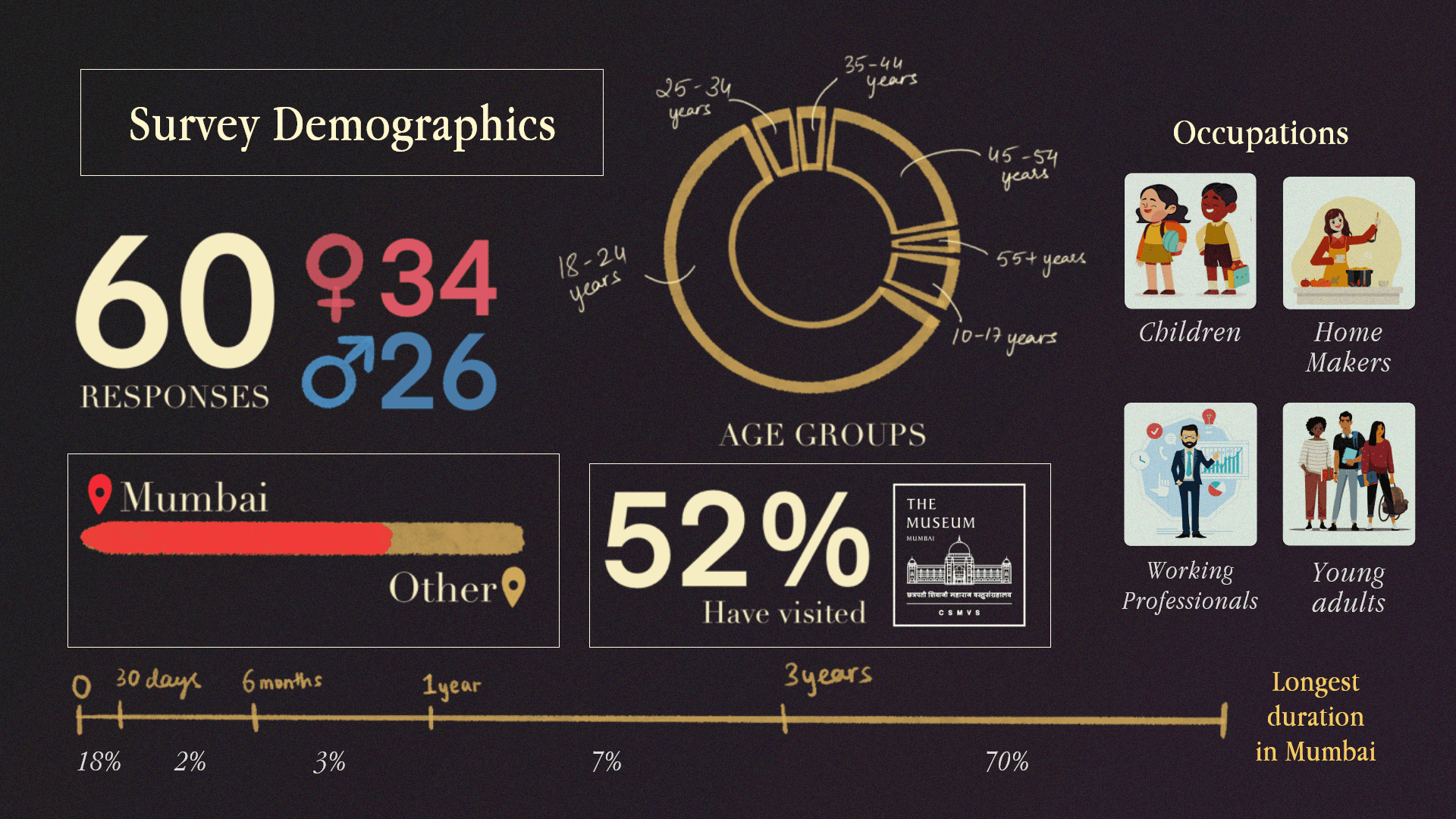
Despite housing incredible cultural artifacts and being situated in Mumbai's tourist district, CSMVS Museum faces a troubling reality: 52% of survey respondents had never visited, and 70% were long-term Mumbai residents. Even tourists visiting the area skip it.
Why Museums Are Failing
Perception Problem
Museums seen as "old, outdated, and unengaging"
Locals view them as one-time educational obligations, not enjoyable destinations
Young people prefer cafés and Marine Drive over cultural spaces
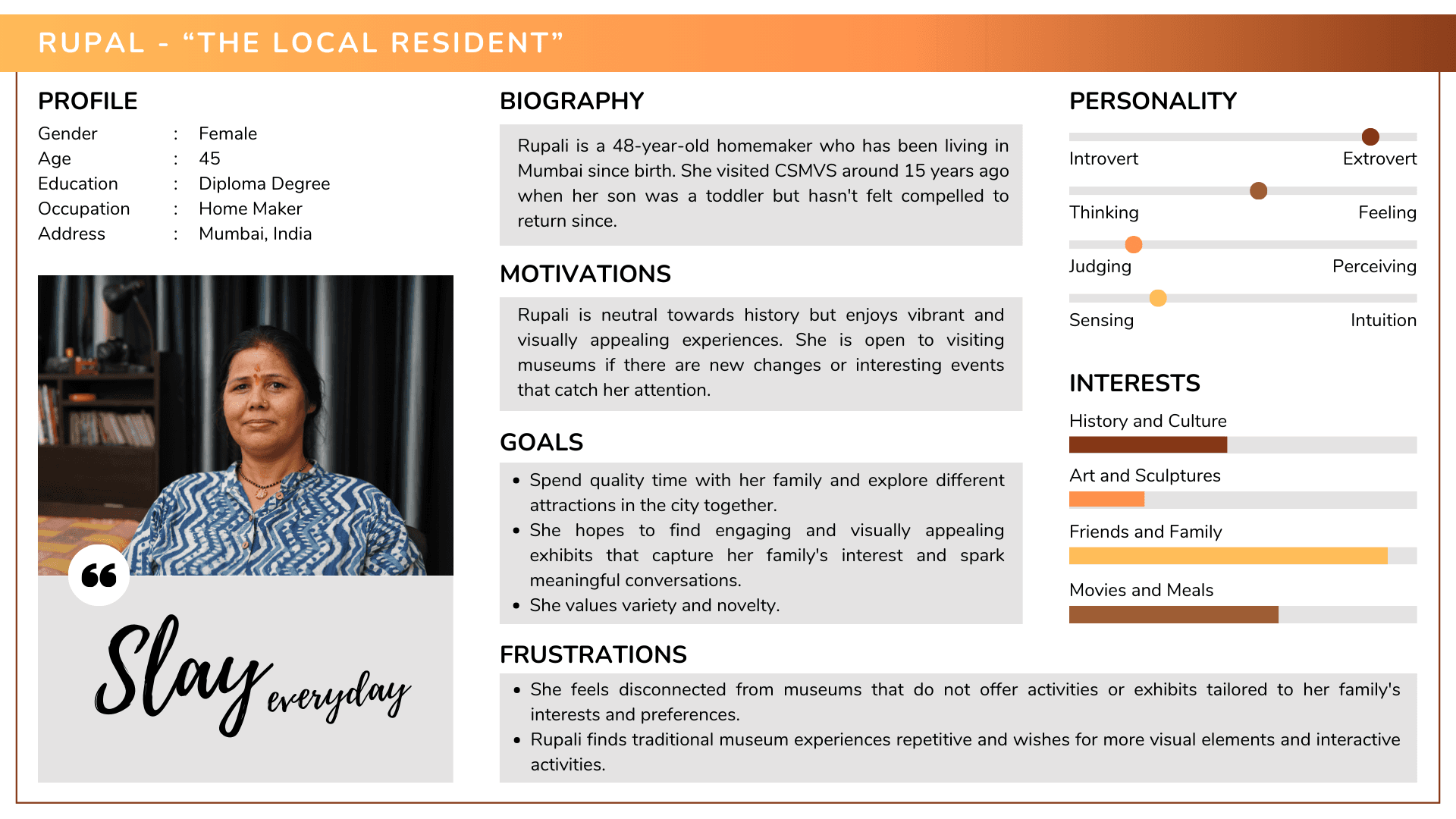
"We just had the excitement to visit it once. But I didn't feel like visiting again." — Rupali, 45-year Mumbai resident
Experience Barriers
Too much reading, not enough interaction
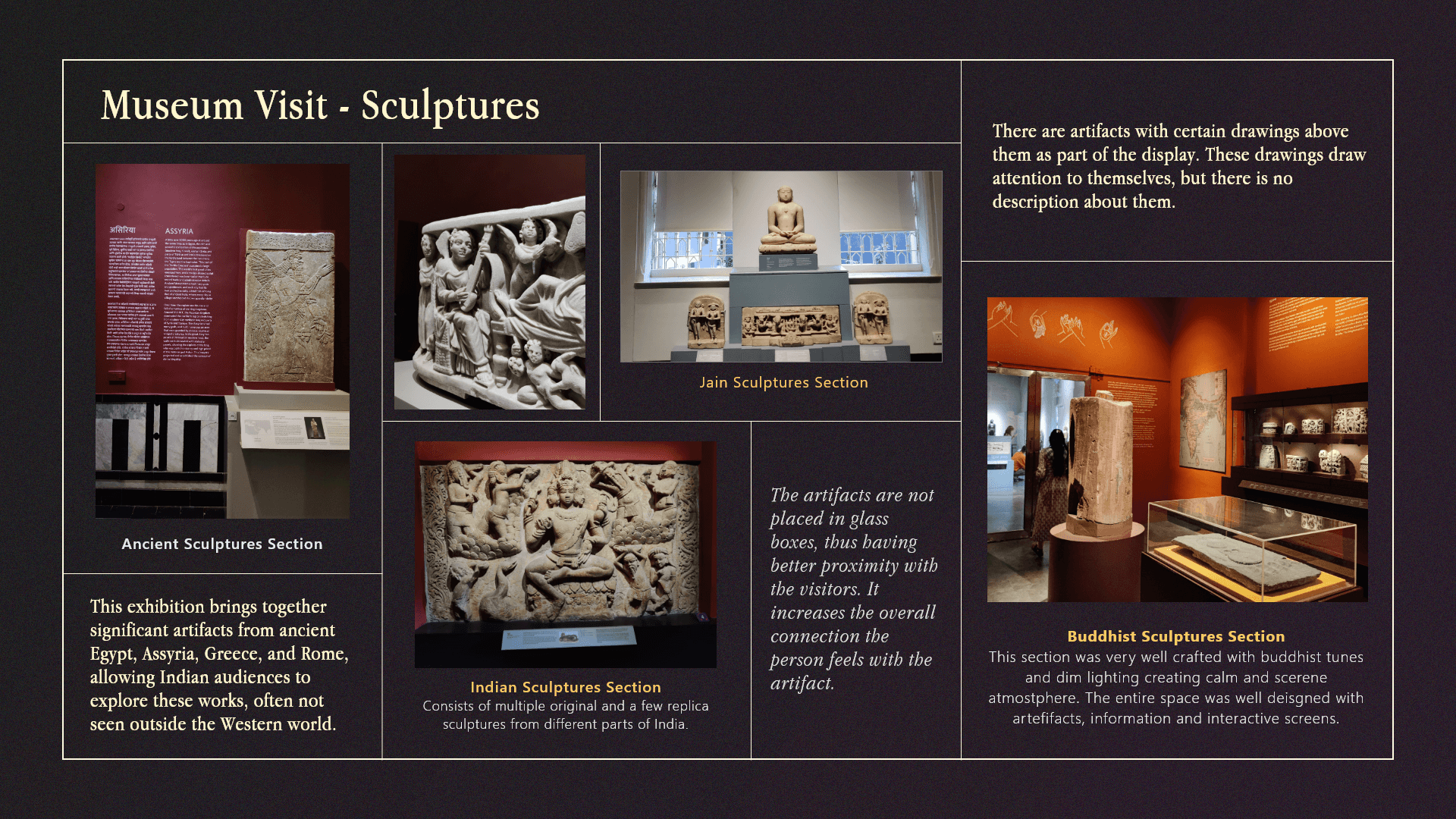
Tiny plaques that visitors crowd around to read
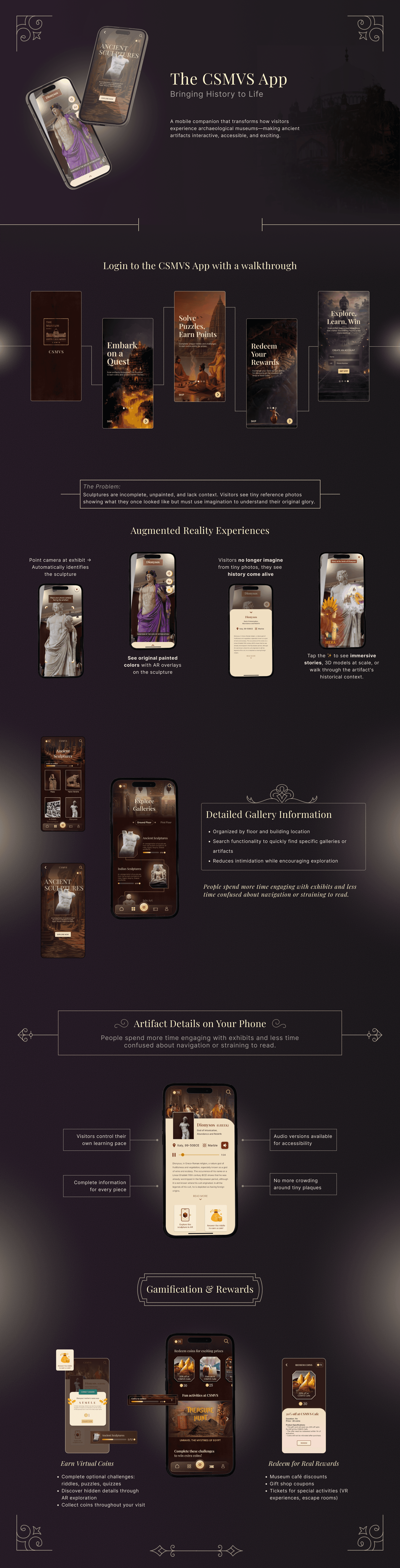
Small reference pictures showing sculptures' original painted forms
No guidance or context for understanding exhibits
Language barriers for non-Hindi/English speakers
This represents a disconnect between Indians and their own heritage. Museums have the potential to be vibrant weekend destinations, but they're stuck being "boring educational spaces" that parents drag children to.
How might we transform archaeological museums from one-time educational obligations into engaging, repeatable experiences that make people excited about their cultural heritage?
The key challenge: Enhance engagement through technology without compromising the authenticity of the artifacts themselves.
My research aimed to uncover why Indians—especially locals—don't visit their own museums, and what would change their minds.
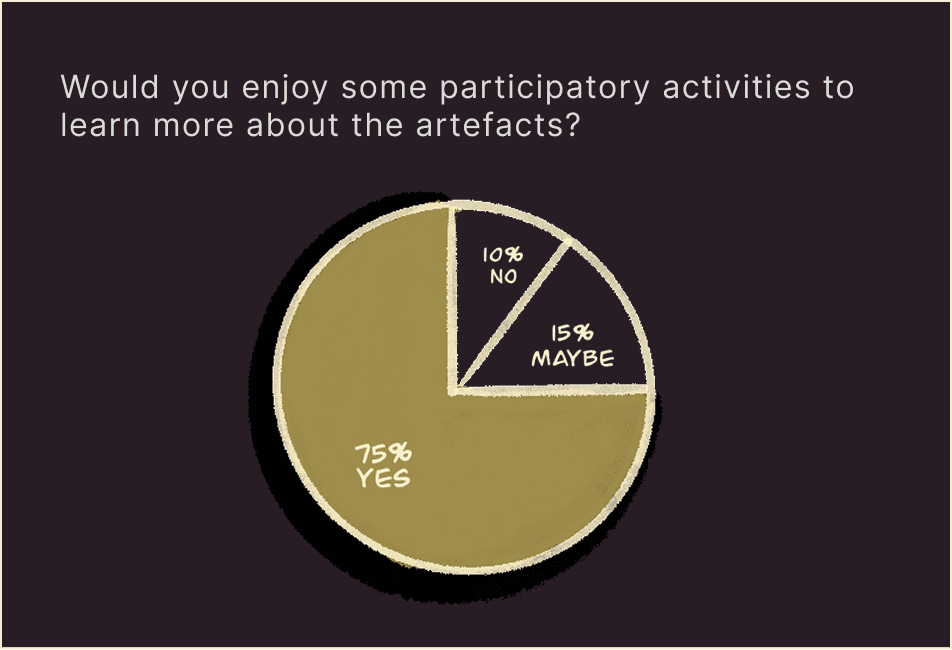
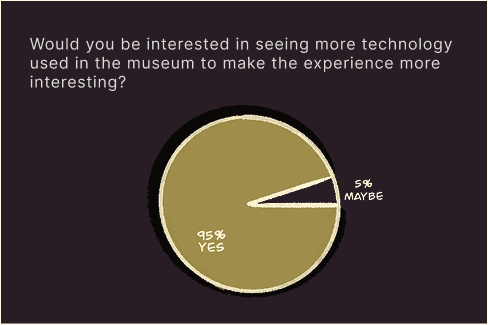
Visual Ethnography at CSMVS
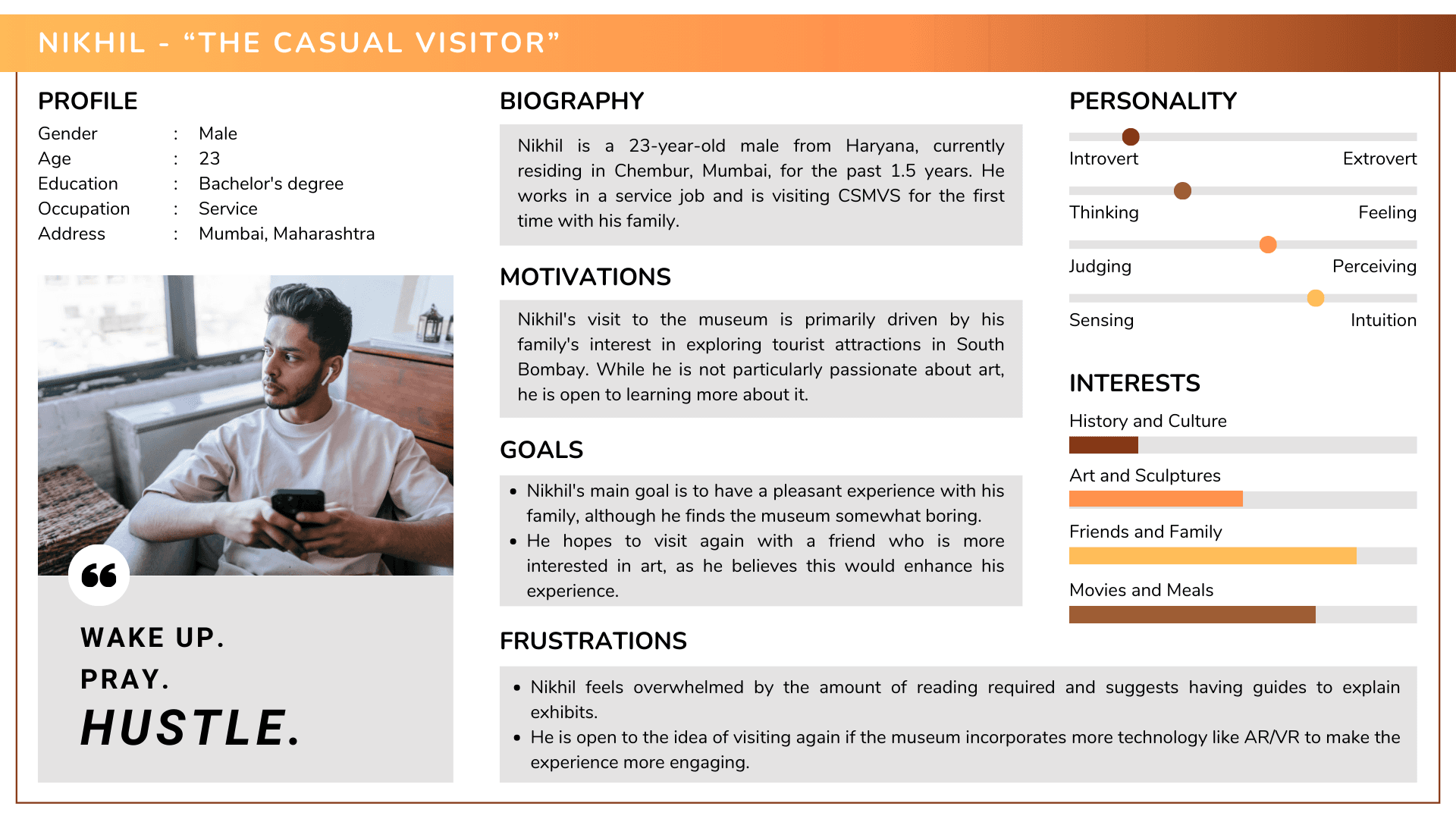
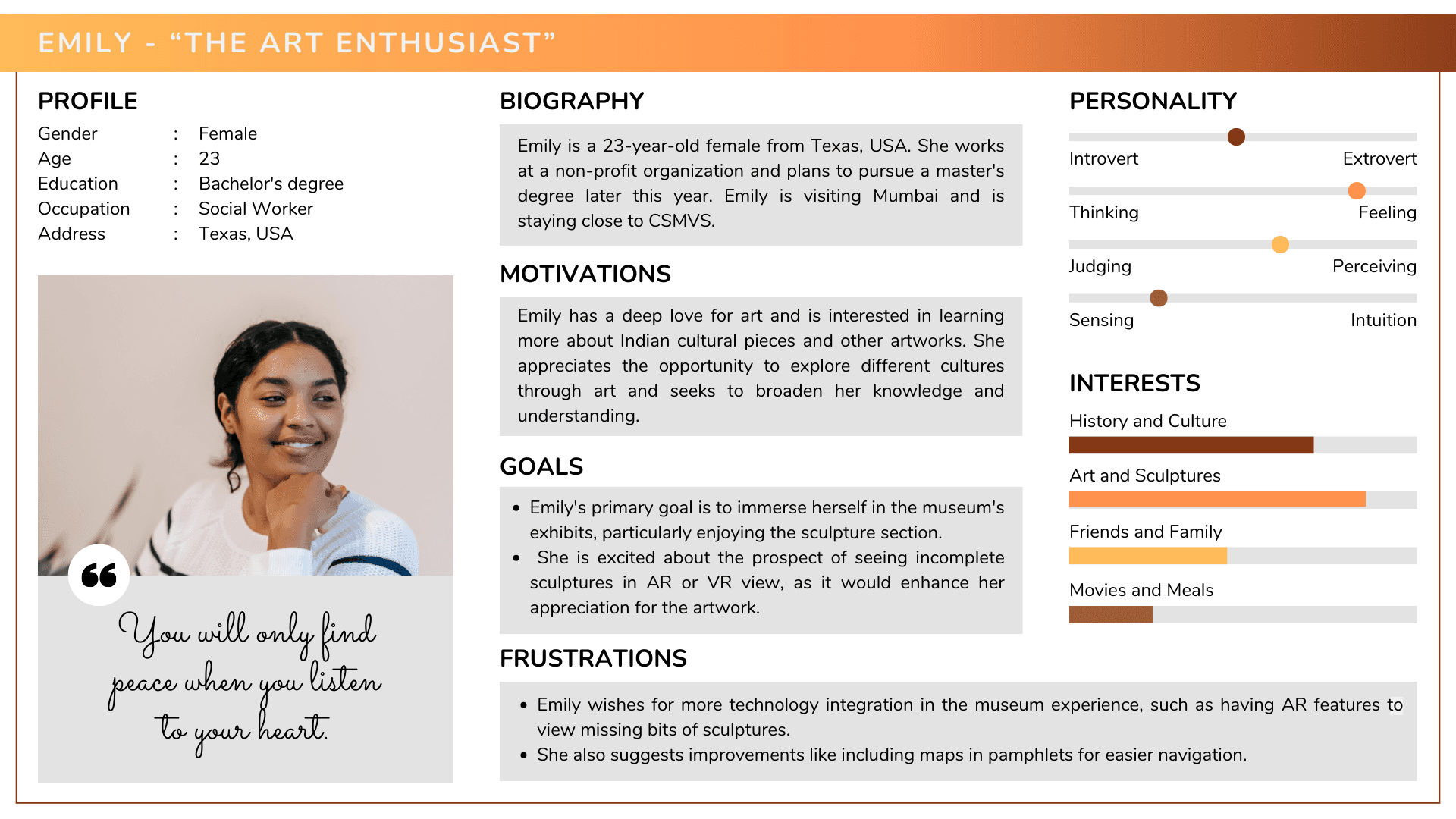
Museums aren't failing because people don't care about history—they're failing because the experience doesn't match modern expectations.
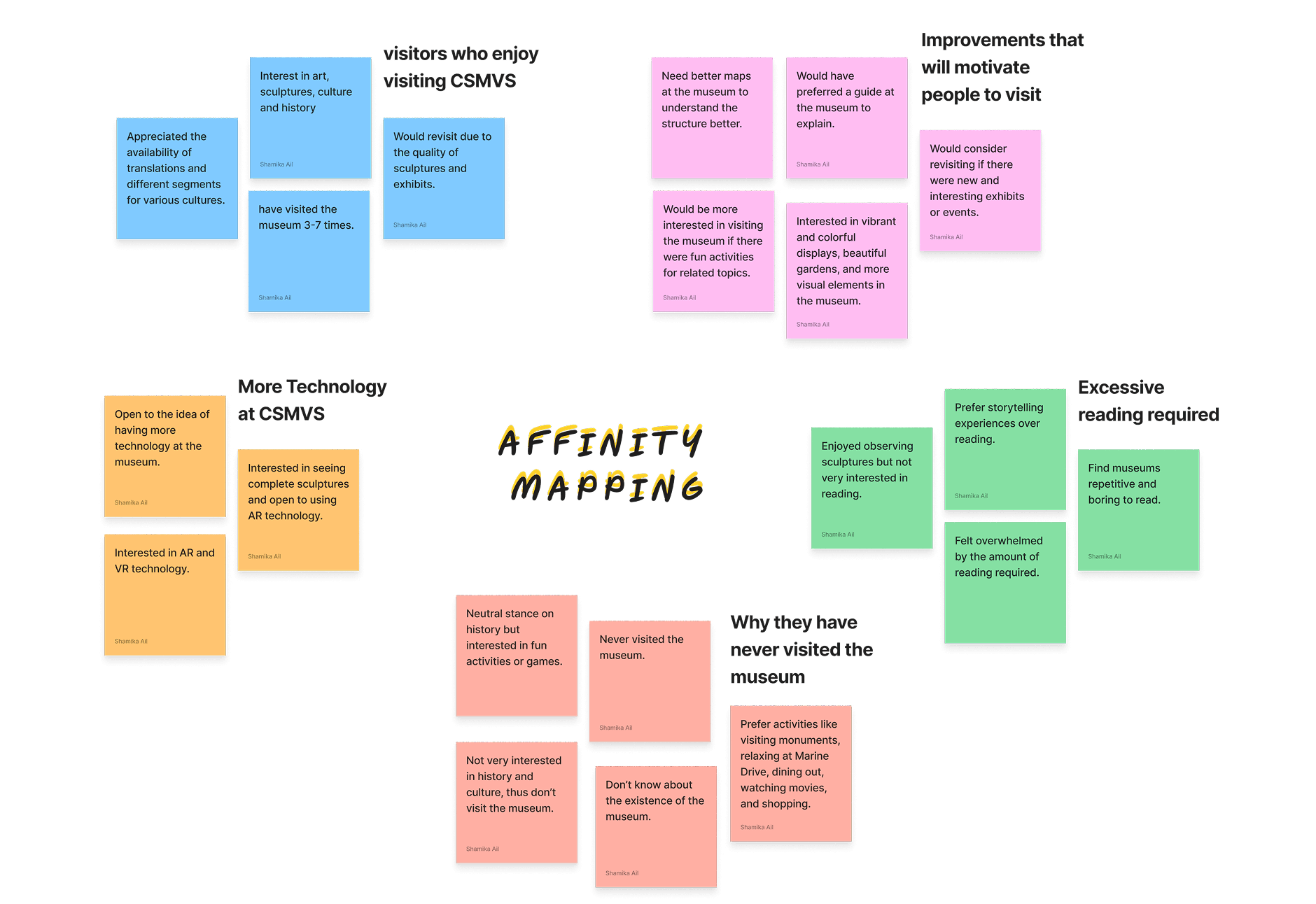
People want:
Interaction over observation — Active participation, not passive viewing
Stories over facts — Context and narratives, not just dates and descriptions
Entertainment + Education — Fun experiences that also teach
Technology that enhances — Digital tools that reveal hidden layers without overshadowing artifacts
The challenge:
How do we modernize the experience while respecting the authenticity and cultural significance of the artifacts?
The museum community has long debated technology integration. Some fear it "blurs education and entertainment" or creates experiences that feel more authentic than the real artifacts.
Technology should support artifacts, not replace them.
Interactive, Not Passive
Move beyond "look and read" to "explore and discover." Users should actively engage with exhibits.
Accessible for All
Work for international tourists, local families, children, seniors, and people with disabilities. Multilingual, with audio support.
Gamified Learning
Introduce playful elements (puzzles, rewards) that motivate deeper exploration without trivializing the content.
Authenticity First
Technology reveals what's hidden (original colors, complete forms, historical context) but never overshadows the real artifact.
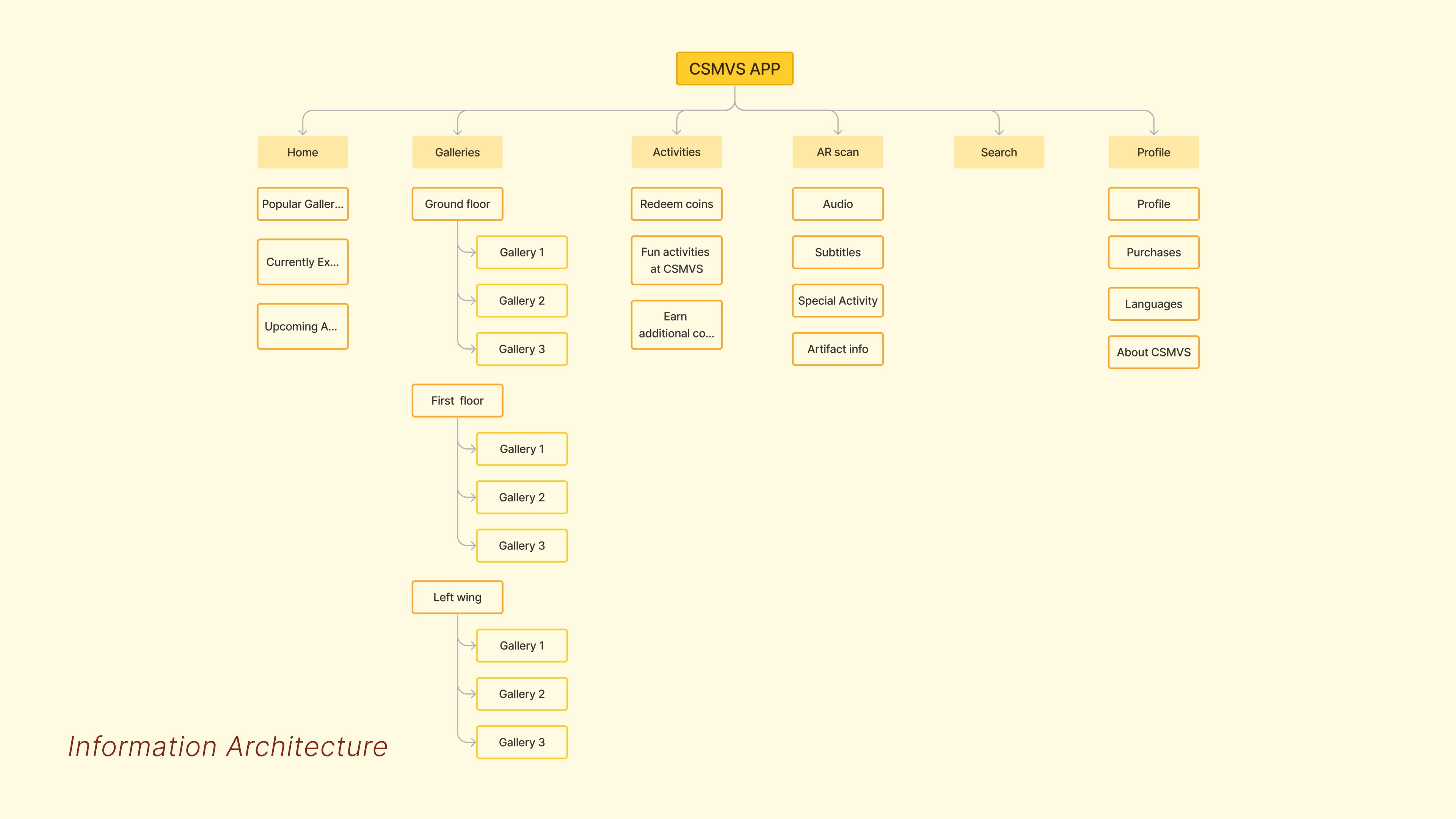
Based on research insights and museum observations, I mapped features to visitor needs:
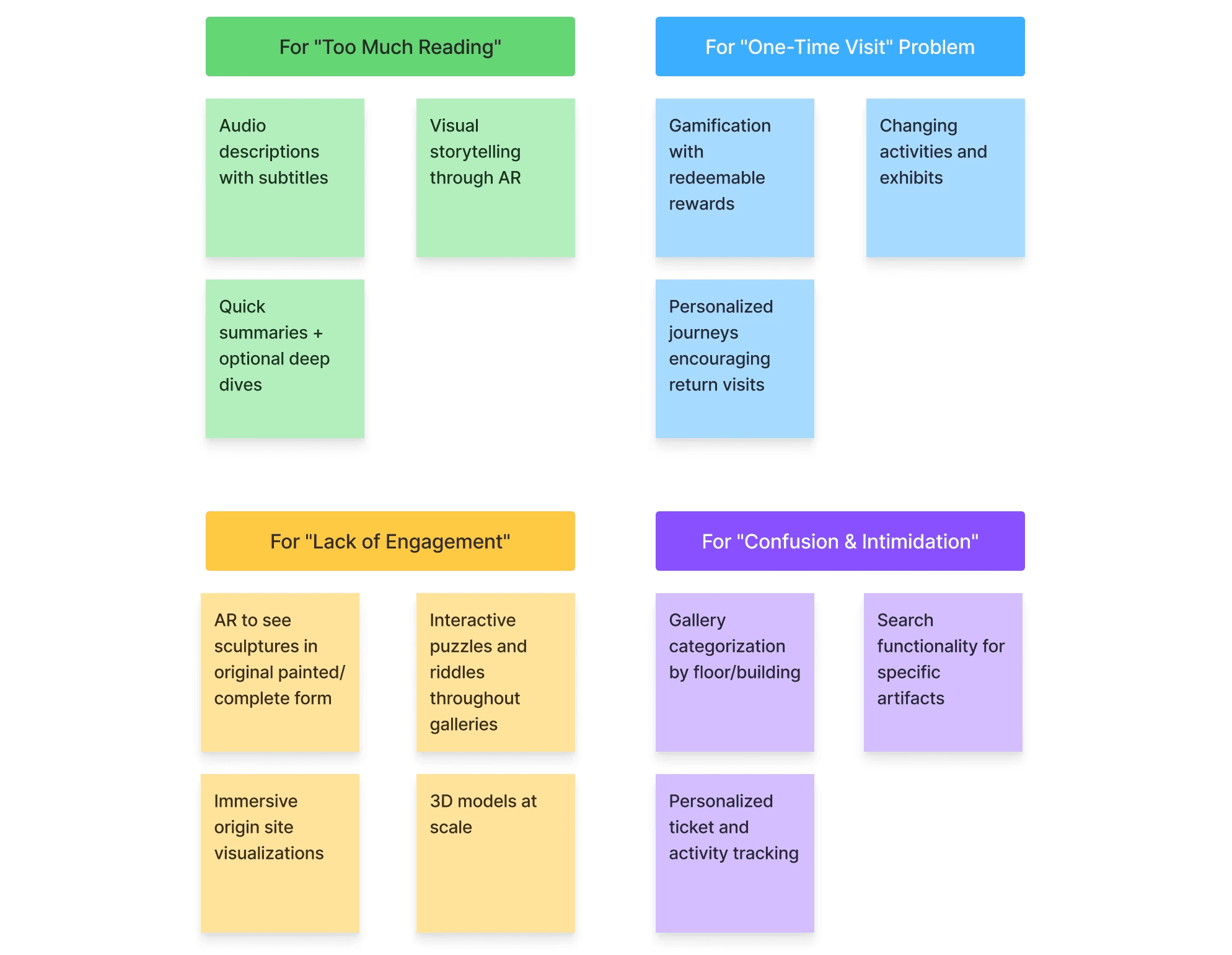
AR is uniquely suited for museums because:
It layers information onto reality — Visitors still see the real artifact, but with enhanced context
It reveals the invisible — Show what sculptures looked like centuries ago without physically altering them
It's accessible — Most people have smartphones; no special equipment needed
It's engaging — Scanning and revealing feels like discovery, not passive consumption
Implementation
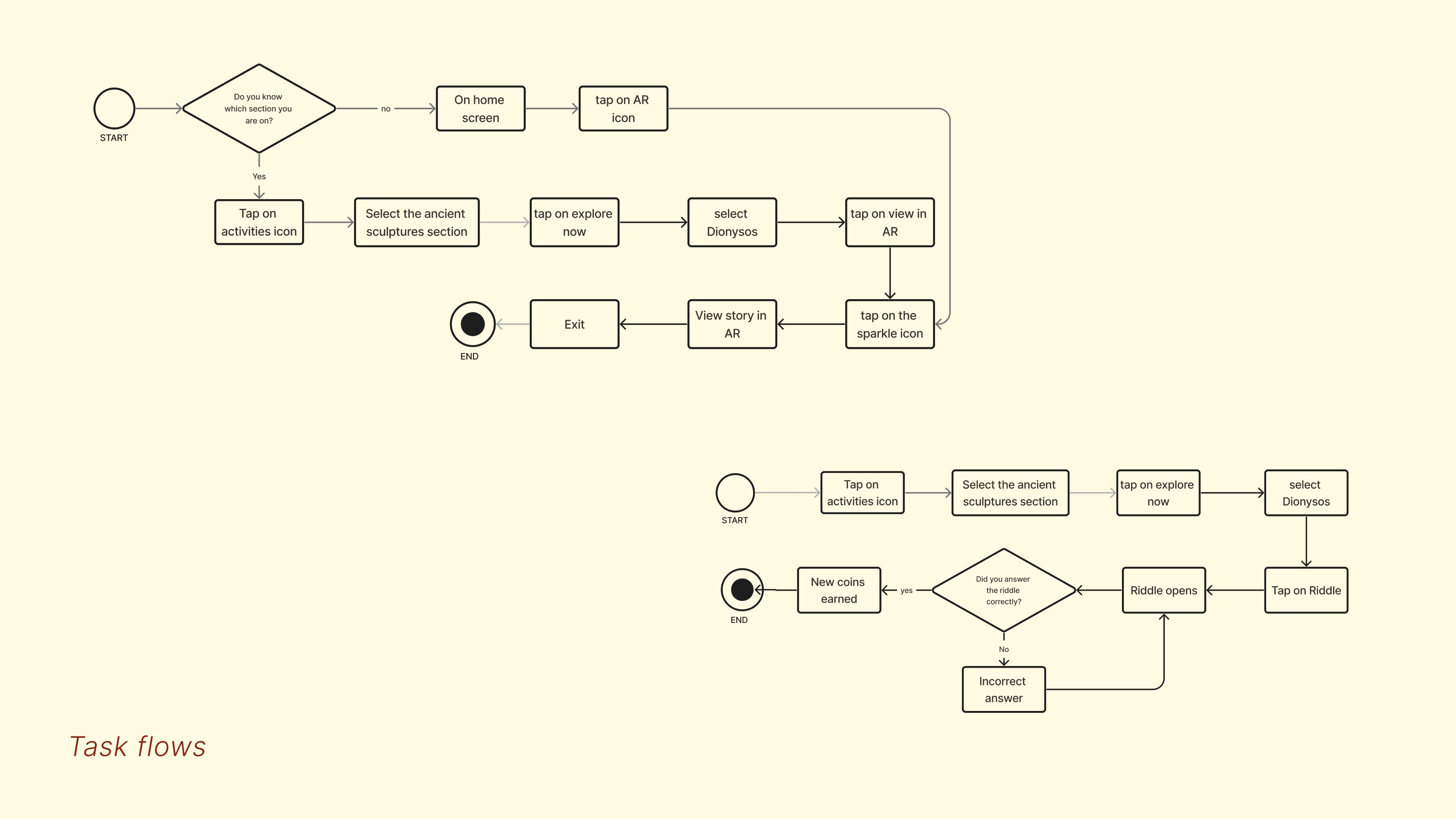
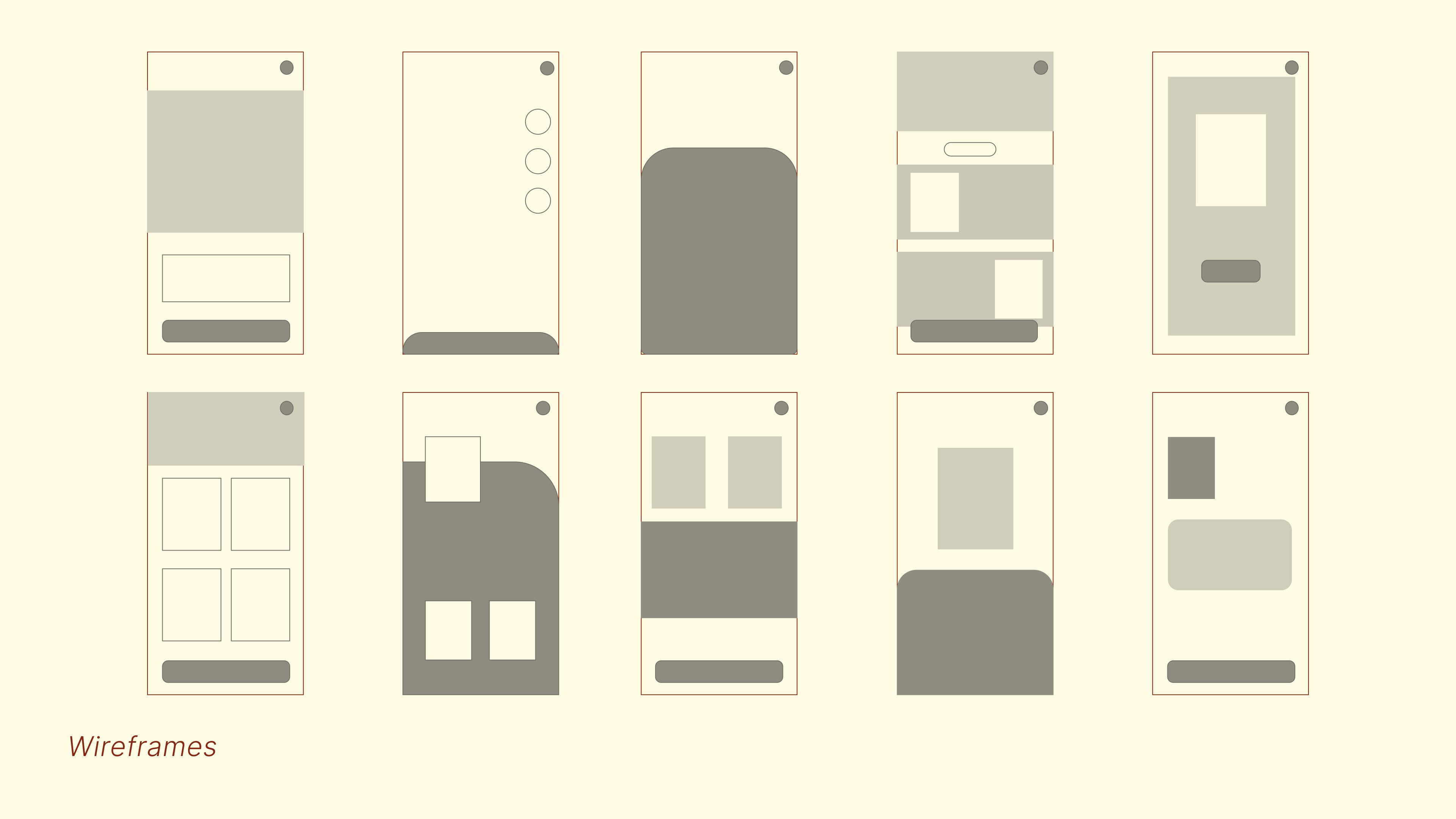
Marker-based AR using exhibits themselves as triggers. Point your phone at a sculpture → see its original painted form, missing pieces restored, or its historical site of origin.
Key Takeaways
Technology should enhance, never replace
The biggest debate in museum design: Does technology take away from artifacts or bring them to life?
My conclusion: It's all about implementation. Bad technology (like the Van Gogh exhibition that made real paintings feel "underwhelming") competes with artifacts. Good technology reveals hidden layers while maintaining focus on the authentic piece.
The rule: If your eyes leave the artifact to look at a screen, the technology failed. AR works because it overlays information onto reality—your attention stays on the original object.
Entertainment + education isn't a compromise—it's a requirement
Museums have traditionally resisted "fun" experiences, fearing they trivialize cultural heritage. But my research showed the opposite:
When museums are engaging, people learn more—not less.
Gamification doesn't cheapen the experience; it motivates deeper exploration. Solving a riddle about a sculpture makes you study it carefully. Earning coins for discoveries encourages you to read plaques you'd otherwise skip.
Lesson: Respect for heritage and enjoyable experiences aren't mutually exclusive. The best museums offer both.
The "one-time visit" problem needs systemic solutions
An app alone won't transform museum culture. What's needed:
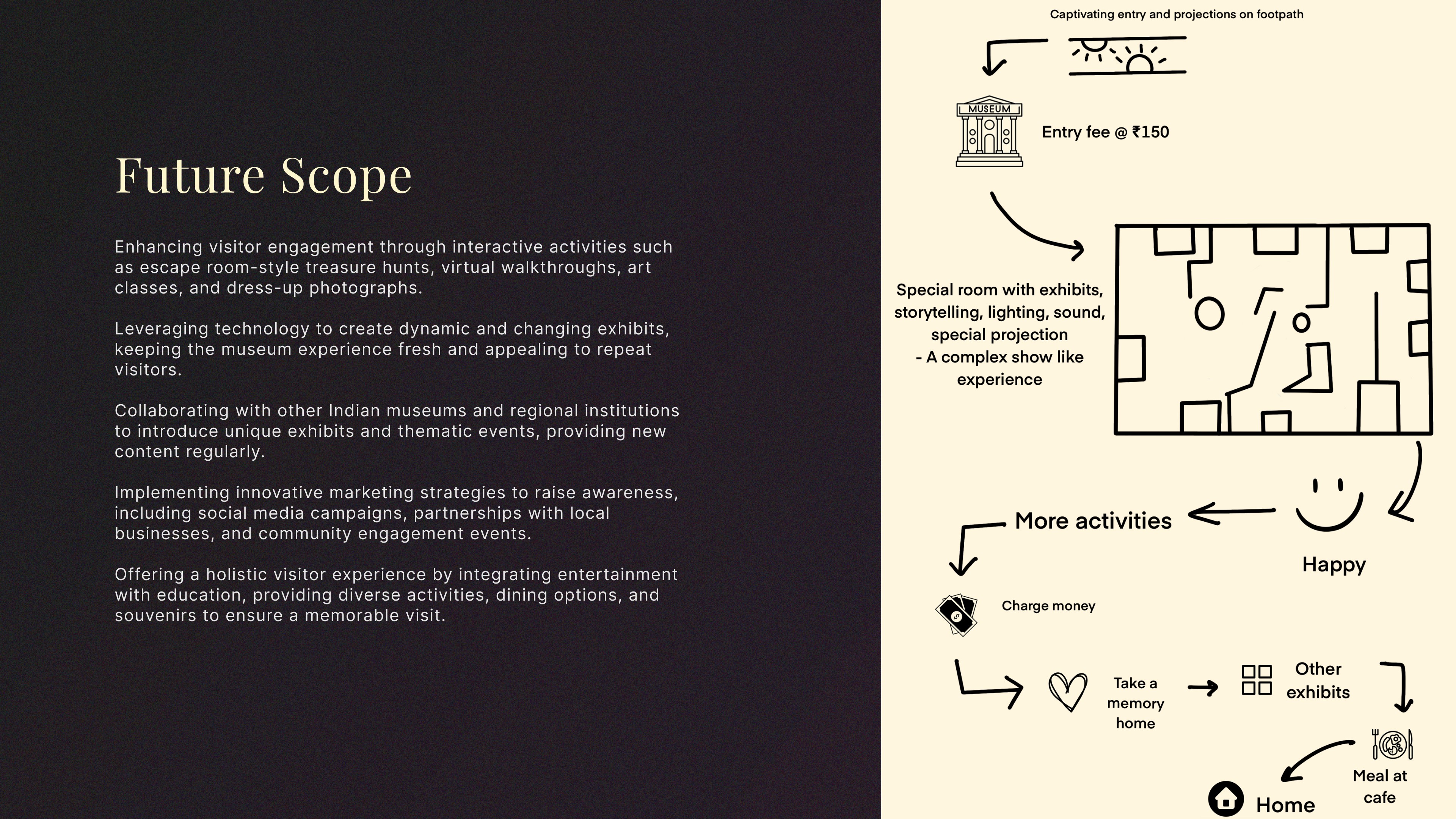
Rotating exhibits — Give people reasons to return
Diverse activities — Escape rooms, VR experiences, workshops, photo opportunities
Community events — Host local partnerships and cultural celebrations
Modern marketing — Reach younger audiences through social media and influencer collaborations
Facility improvements — Dining options, gift shops, comfortable spaces to rest
Insight: Technology is one piece of a larger cultural transformation. Museums must evolve from "educational institutions" to "cultural destinations."
Research reveals the gap between intent and behavior
People say they value history and culture—but they don't visit museums. Why?
The answer wasn't what I expected. It's not apathy; it's friction:
"I didn't know it existed" (awareness problem)
"Can't find the time" (priority problem)
"Not interested" (perception problem)
Real learning: When you remove friction (make it engaging, accessible, social-media-worthy), the latent interest surfaces. Indians DO care about heritage—they just need museums to meet them where they are.
Large-scale usability testing in the museum
I conducted testing with 5 participants, but a real-world pilot program with hundreds of visitors would reveal:
How AR performs in crowded galleries during peak hours
Whether gamification actually increases return visits
What rewards motivate people most
How different age groups interact with features
Accessibility beyond language
While I included audio and subtitles, deeper accessibility features could include:
Navigation assistance for visually impaired visitors
Wheelchair-accessible route planning
Sensory-friendly experiences for neurodiverse visitors
Collaboration with museum staff
Curators, guides, and administrative staff have invaluable insights. Co-designing with them would ensure the app supports their work rather than creating additional challenges.
Offline functionality
Museums often have poor Wi-Fi. Building robust offline AR and content access would ensure the app works everywhere.
For Museums:
Increased local footfall and repeat visits
Attracts younger audiences who currently avoid museums
Positions museums as modern, tech-forward cultural hubs
Creates new revenue streams (rewards, special activities)
For Visitors:
Makes cultural heritage accessible and exciting
Removes language and information barriers
Transforms passive viewing into active discovery
Creates shareable, social-media-worthy experiences
For Society:
Reconnects Indians with their cultural heritage
Preserves history by making it relevant to new generations
Demonstrates how technology and tradition can coexist